All projects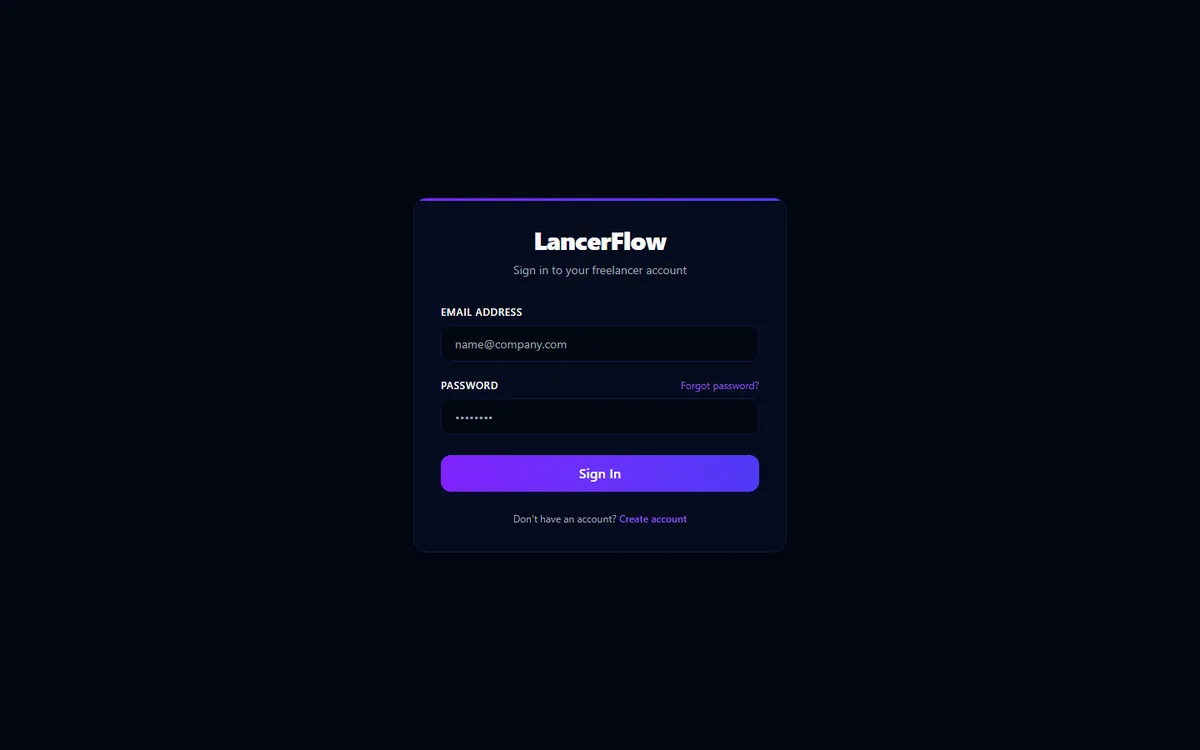
Freelancer CRM
Production-grade CRM taking freelancers from lead to payment — live as LancerFlow
Next.jsTypeScriptExpressMongoDBTurborepopnpm
The Problem
Freelancers and small agencies juggle leads, quotes, projects, invoices, and payments across five different tools — deals slip through the cracks and getting paid means manual follow-up.
The Solution
A single CRM covering the full freelance workflow: leads → quotes → projects → invoices → payments. Designed as a real SaaS product with an 18-phase spec, multi-tenant workspaces, and role-based access from day one.
Key Features
- Lead and client pipeline with stage tracking
- Versioned quotes and invoices — sent documents are immutable
- Integer-based money math (paise) to eliminate rounding bugs
- Multi-tenant workspaces with owner/admin/member roles
- One declarative RBAC permission matrix shared across the stack
- Consistent API envelope with typed error codes
How to Use
- 1.Open the live app (LancerFlow) and create your account, then sign in
- 2.Set up your workspace and invite teammates with owner, admin, or member roles
- 3.Add leads as enquiries come in and move them through the pipeline stages
- 4.Convert a won lead into a client, then create a quote with line items
- 5.Turn accepted quotes into projects and invoices, and record payments as they arrive
Where to Use It
- Freelancers who want leads, quotes, invoices, and payments in one tool instead of five
- Small agencies and studios managing multiple clients and projects at once
- Independent consultants who need versioned, immutable quotes and invoices for their records
- Any solo business tired of chasing payments through spreadsheets and email threads
Architecture
Turborepo monorepo: Express + TypeScript REST API, Next.js frontend, and a shared package holding enums, the RBAC matrix, and money utilities as a single source of truth. Every business query flows through a base repository scoped by workspace ID; MongoDB transactions guard multi-document writes.
Results
Foundations milestone shipped with full test coverage of the shared domain layer; auth, workspaces, and the leads pipeline in active development against approved phase specs.
Timeline
Ongoing — 18-phase roadmap with phase-gate approvals
Lessons Learned
- · Writing the spec before the code — every phase is an approved design doc, which kills scope drift.
- · Putting enums, permissions, and money math in one shared package prevents the frontend and API from ever disagreeing.
Future Improvements
- · PDF generation and email delivery for quotes and invoices
- · Dashboard with revenue analytics and payment reminders
Next project
Focus Ring